
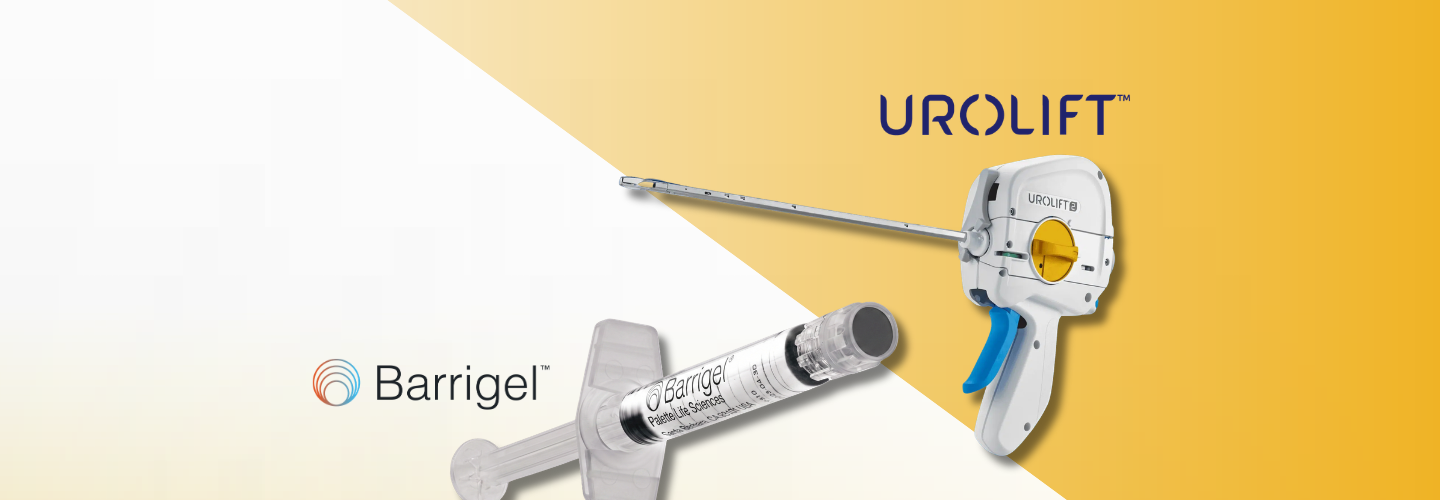
New Clinical Data Unveiled at AUA
Teleflex Showcases New Clinical Data at Leading Urological Congresses Highlighting Patient Experience Advantages of the UroLift™ System and Long-Term Toxicity Reduction with Barrigel™ Rectal Spacer
First Head-to-Head Randomized Control Study (RCT) Reinforces Early Patient Experience Benefits and 12-month Durability of the UroLift™ System versus Rezūm™1
Three-Year Data Demonstrate Sustained Reduction in Gastrointestinal Toxicity with Barrigel™ Rectal Spacer2
WAYNE, Pa., May 21, 2026 – Teleflex Incorporated (NYSE: TFX), a leading global provider of medical technologies, today announced the Interventional Urology Business Unit has released new clinical data across two major urological congresses, reinforcing the value of the UroLift™ System and Barrigel™ rectal spacer in improving patient-centered outcomes across benign prostatic hyperplasia (BPH) and prostate cancer care. Teleflex Interventional Urology innovations help urologists treat medical needs while ensuring patients can recover and maintain their quality of life long after treatment.
In parallel with Teleflex’s long-term strategy to significantly streamline the Teleflex business and narrow focus to the critical care and high-acuity hospital end-markets, the company’s Interventional Urology business unit continues to drive clinical value as it prepares for its divestiture in the second half of 2026.
Data presented at the 2026 American Urological Association (AUA) Annual Meeting in Washington, DC. May 15 – 18 and the European Society for Radiotherapy & Oncology (ESTRO) Congress held in Stockholm May 15 – 19 highlight early patient experience following BPH treatment1 with the UroLift™ System and sustained reductions in radiation-associated toxicity for prostate cancer patients who received Barrigel™ rectal spacer.2
CLEAR RCT: First Head-to-Head Comparison of Minimally Invasive Surgical Therapies (MISTs) Demonstrates Favorable Early Patient Experience with the UroLift™ System*
At AUA 2026, Dr. Bilal Chughtai**, a urologist with Northwell Health, Garden City, N.Y., presented 12-month findings from the CLEAR (Comparing UroLift™ Experience Against Rezūm™) randomized controlled trial, the first prospective, multicenter, head-to-head RCT comparing MISTs for BPH.1
The study evaluated key endpoints including catheter independence, symptom improvement, patient experience, and sexual function.1
Key study endpoints of the study:
- Catheter independence from day three through day seven was significantly better among UroLift™ System patients compared to Rezūm™ patients, with 3 percent requiring catheter versus 20 percent (p=.02) respectively1
- Early patient experience was better for the UroLift™ System patients compared to Rezūm™ patients1
- UroLift™ System and Rezūm™ subjects had similar durability through 12 months1
- Patients’ sexual function† was preserved through 12 months with the UroLift™ System1
“What stands out in our CLEAR RCT study is the consistency of the early patient experience advantages with the UroLift™ System, particularly catheter independence, rapid recovery, and preservation of sexual function, which are critical factors for both patients and physicians when selecting a treatment approach,” said Dr. Bilal Chughtai**, a urologist practicing in Syosset, N.Y.
Barrigel™ Rectal Spacer Three-Year Data Demonstrate Sustained Reduction in Radiation-Associated Toxicity*
At ESTRO 2026, new three-year outcomes presented by Dr. Martin King** highlighted the long-term safety and effectiveness of Barrigel™ rectal spacer.2
Key endpoints of the study:
- Patients in the Barrigel™ rectal spacer arm of the study experienced a continued Grade 2+ toxicity benefit sustained through three years. Zero percent of the Barrigel™ rectal spacer patients experienced Grade 2+ toxicity versus 10 percent in the control arm2
- Fewer patients with greater than one centimeter of apical spacing had a decline in bowel quality of life at 36 months versus control2
These results demonstrate a durable benefit for the Barrigel™ rectal spacer subjects sustained through three years, reinforcing the role of rectal spacing in protecting bowel function during and after radiation therapy.2
“The three-year data further validate the clinical value of Barrigel™ rectal spacer, demonstrating sustained and clinically meaningful reductions in gastrointestinal toxicity,” said Martin King**, MD, PhD, presenter and radiation oncologist with the Dana-Farber Brigham Cancer Center, Harvard Medical School Associate Professor of Radiation Oncology. “Reducing radiation treatment-related toxicity is essential for prostate cancer patients, and these findings support the continued adoption of rectal spacing as a standard component of care.” 2
“These data reflect our prostate health leadership and ongoing commitment to advancing evidence-based, patient-centered solutions across the urology care continuum,” said Travis Gay, President and General Manager, Interventional Urology, Teleflex. “From improving early recovery and preserving sexual function in BPH patients with the UroLift™ System to delivering durable protection against radiation-related rectal toxicity with Barrigel™ spacer, we are focused on technologies that meaningfully improve patients’ lives.”
About the UroLift™ System
The UroLift™ System is a minimally invasive treatment for lower urinary tract symptoms due to benign prostatic hyperplasia (BPH). It is indicated for the treatment of symptoms of an enlarged prostate up to 100cc in men 45 years or older (50 years outside U.S.). The UroLift™ System permanent implants, which can be delivered during an outpatient procedure,3 relieve prostate obstruction without heating, cutting, destruction of, or removing prostate tissue. The UroLift™ System can be used to treat a broad spectrum of anatomies, including obstructive median lobe.4,5 It is the only leading BPH procedure shown to not cause new onset, sustained erectile or ejaculatory dysfunction.†6-7 A study conducted over five years showed a low retreatment rate of about 2 to 3 percent per year, or a total of 13.6 percent over the course of the study, demonstrating UroLift™ System durability.8 Most common side effects are temporary and can include hematuria, dysuria, micturition urgency, pelvic pain, and urge incontinence.9 Rare side effects, including bleeding and infection, may lead to a serious outcome and may require intervention. Individual results may vary. The prostatic urethral lift procedure (using the UroLift™ System) is recommended for the treatment of BPH in both the 2021 American Urological Association and 2022 European Association of Urology clinical guidelines. More than 500,000 men have been treated with the UroLift™ System in select markets worldwide.10 Learn more at www.UroLift.com.
UroLift System Important Safety Information
UroLift is indicated for the treatment of symptoms of an enlarged prostate up to100cc in men 50 years or older. As with any medical procedure, individual results may vary. Most common side effects are temporary and include hematuria, dysuria, micturition urgency, pelvic pain, and urge incontinence.9 Rare side effects, including bleeding and infection, may lead to a serious outcome and may require intervention. Consult the Instructions for Use (IFU) for more information.
About Barrigel™ Rectal Spacer
Barrigel™ rectal spacer is the first and only hyaluronic acid rectal spacer that separates the prostate from the rectum to protect the rectum during radiation therapy treatment for prostate cancer.11 Barrigel™ rectal spacer is made from Non-Animal Stabilized Hyaluronic Acid (NASHA).12
Hyaluronic acid is a substance naturally present in the human body and is highly biocompatible and fully absorbable. NASHA has a proven history of safety and efficacy in a wide variety of medical applications in men, women and children worldwide.13,14
Barrigel™ rectal spacer has been proven to significantly reduce unwanted side effects from prostate cancer radiation therapy11and is cleared for rectal spacing in the United States, Australia, and Europe.15 Barrigel™ rectal spacer is indicated for prostate cancer patients with T1-T3b disease. For more information about Barrigel™ rectal spacer, please visit https://barrigel.com/hcp/barrigel-control-matters.
Barrigel™ Rectal Spacer Important Safety Information
Barrigel™ rectal spacer is intended to temporarily position the anterior rectal wall away from the prostate during radiotherapy for prostate cancer and, in creating this space, it is the intent of Barrigel rectal spacer to reduce the radiation dose delivered to the anterior rectum. Barrigel rectal spacer is composed of biodegradable material and maintains space for the entire course of prostate radiotherapy treatment and is intended to be absorbed by the patient’s body over time.
Barrigel rectal spacer should only be administered by qualified and properly trained physicians with experience in ultrasound guidance and injection techniques in the urogenital/pelvic area.
As with any medical treatment, there are some risks involved with the use of Barrigel rectal spacer. Potential complications associated with the use of Barrigel rectal spacer include, but are not limited to: pain associated with Barrigel rectal spacer injection; needle penetration of the bladder, prostate, rectal wall, rectum, or urethra; injection of Barrigel rectal spacer into the bladder, prostate, rectal wall, rectum, urethra, or intravascularly; local inflammatory reactions; infection; urinary retention; rectal mucosal damage, ulcers, necrosis; bleeding; constipation; and rectal urgency. More information on indications, contraindications, warnings and instructions for use can be found in the Instructions For Use at www.barrigel.com.
Caution: Federal (USA) law restricts this device to sale by or on the order of a physician.
About Interventional Urology
The Interventional Urology Business Unit is leading in prostate health by advancing clinical evidence, elevating education, and supporting physicians and patients. Our portfolio includes Barrigel™ rectal spacer for men seeking to reduce rectal side effects associated with prostate cancer radiation therapy, the UroLift™ System for men suffering from BPH symptoms, and Deflux™ injectable gel for children with grades II-V vesicoureteral reflux (VUR).
Forward-Looking Statements
Any statements contained in this press release that do not describe historical facts may constitute forward-looking statements. Any forward-looking statements contained herein are based on our management’s current beliefs and expectations, but are subject to a number of risks, uncertainties and changes in circumstances, which may cause actual results or company actions to differ materially from what is expressed or implied by these statements. These risks and uncertainties are identified and described in more detail in our filings with the Securities and Exchange Commission, including our Annual Report on Form 10-K.
Explore Other Articles

Teleflex Announces Sale of Interventional Urology Business
Read More
Clinical Study Proves UroLift® System Is Effective in Improving Benign Prostatic Hyperplasia (BPH) Symptoms
Read More
Sexual Function Improved and Preserved with the UroLift® System, a Proven Alternative to BPH Medications
Read More
Address BPH Symptoms Early to Prevent Permanent Bladder Damage and Improve Long-Term Quality of Life
Read MoreBarrigel, Deflux, and UroLift are trademarks or registered trademarks of Teleflex Incorporated or its affiliates, in the U.S. and/or other countries. © 2026 Teleflex Incorporated. All rights reserved. APM1495A
*Studies sponsored by Teleflex.
**Drs. Chughtai and King are paid consultants of Teleflex
†No instances of new, sustained erectile or ejaculatory dysfunction in the L.I.F.T. pivotal study
References
1.
Chughtai et al. J Urol 2026
2.
King M, Chao M et al. Prospective Randomized Controlled Trial of Hyaluronic Acid Spacer for Hypofractionated Prostate Radiation Therapy: 3-Year Results. Presented at: European Society for Radiotherapy and Oncology 2026 Annual Congress; May 2026; Stockholm, Sweden. Proffered Paper 3623.
3.
Shore, Can J Urol 2014
4.
Rukstalis, Prostate Cancer Prostatic Dis 2018
5.
UroLift™ System Instructions for Use
6.
AUA BPH Guidelines 2003, 2020
7.
McVary, Urology 2019
8.
Roehrborn, Can J Urol 2017
9.
Roehrborn, J Urol 2013
10.
Management estimate based on product sales as of June 2024. Data on file. Teleflex Interventional Urology.
11.
Mariados NF, Orio PF III, King M et al. JAMA Oncol (2023)*,**
12.
Barrigel Injectable Gel Instructions for Use (2022)
13.
Svatos M, Chell E, Low DA et al. Med Phys (2024)*,**
14.
Restylane® celebrates 25 years of natural-looking results with its signature line of hyaluronic acid fillers. 2021.
15.
Data on file Teleflex. 2025
Teleflex Announces Sale of Interventional Urology Business
Teleflex has entered into a definitive agreement to divest our Interventional Urology portfolio, including the UroLift System™, Barrigel™ rectal spacer, Deflux™ injectable gel, and Solesta™ bulking agent, to Intersurgical®.
This transaction is expected to close in the second half of 2026, subject to customary regulatory approvals and other closing conditions.
We’re excited about this opportunity and remain committed to providing the same high-quality products, reliable service, and on-time delivery our customers expect. We will keep our physicians and patients informed throughout the transition. Please feel free to contact your sales representative with any questions or concerns.
Explore Other Articles
New Clinical Data Unveiled at AUA
Read More
Clinical Study Proves UroLift® System Is Effective in Improving Benign Prostatic Hyperplasia (BPH) Symptoms
Read More
Sexual Function Improved and Preserved with the UroLift® System, a Proven Alternative to BPH Medications
Read More
Address BPH Symptoms Early to Prevent Permanent Bladder Damage and Improve Long-Term Quality of Life
Read More
Clinical Study Proves UroLift® System Is Effective in Improving Benign Prostatic Hyperplasia (BPH) Symptoms
Clinical data published in the peer-reviewed journal, Prostate Cancer and Prostatic Disease, explains the mechanism of action through which the UroLift® System provides long-term durability and sustained results for patients with benign prostatic hyperplasia (BPH), also referred to as enlarged prostate.
The UroLift® System implants provide rapid relief from disruptive lower urinary tract symptoms (LUTS) through a minimally invasive procedure that pulls back enlarged prostate tissue. This study is unique in its combination of 3 different facets of research which include pre-clinical canine tissue, human tissue, and post-market surveillance data. The researchers examined tissue samples from 24 healthy canines and 4 human patients who were implanted with the UroLift® System to uncover any potential changes attributed to the implants.
They found that the extracted tissues revealed normal-appearing tissue with minimal-mild inflammation and no encrustation, indicating a stable and normal healing response. The data support a long-term biological mechanism of action whereby compression-induced localized tissue remodeling is initiated by the UroLift® System implant placement and leads to a widened prostatic urethra.
Furthermore, post-market surveillance data of over 770,000 UroLift® System devices support that the implant is stable and remains fixed after proper deployment and demonstrate low rates of breakage (0.004%) and encrustation (0.006%). The biocompatibility and stability of the UroLift® System implants appear to be superior to prostatic stents, with studies of prostatic stents showing that up to 47% of men require removal of their implants due to complications associated with migrations and encrustations.1
The UroLift® implant pulls the enlarged prostate toward the capsule, thereby mechanically creating an immediate, visible de-obstruction in the prostatic urethra. Researchers describe this “prostate lift” as a distinct mode of action and compared it with not only prostatic stents, but also thermal ablation techniques that induce tissue damage and may result in extended periods of edema, retention/ catheterization, and higher risks of urinary infections and ejaculatory dysfunction.2-7
“The UroLift® System is the first mechanical prostatic implant to demonstrate safe and effective treatment of BPH without common issues associated with prior stents. This study describes in detail the unique prostate lift mechanism of action that is the basis of its durable outcomes,” said Dr. Peter Chin, Clinical Associate Professor, Graduate School of Medicine, University of Wollongong, and author on the paper. “Not only are the results seen with the UroLift® System sustainable, but the implants can provide a superior patient experience during the early recovery period4, and rapid symptom relief and preservation of sexual function*8
Read more on how the UroLift® System here.
The UroLift System is indicated for the treatment of symptoms due to urinary outflow obstruction secondary to benign prostatic hyperplasia (BPH) in men 50 years of age or older and enlarged prostate up to 100cc. Most common side effects are temporary and include hematuria, dysuria, micturition urgency, pelvic pain, and urge incontinence.8 Rare side effects, including bleeding and infection, may lead to a serious outcome and may require intervention. Consult the Instructions for Use (IFU) for more information.
Explore Other Articles
New Clinical Data Unveiled at AUA
Read More
Teleflex Announces Sale of Interventional Urology Business
Read More
Sexual Function Improved and Preserved with the UroLift® System, a Proven Alternative to BPH Medications
Read More
Address BPH Symptoms Early to Prevent Permanent Bladder Damage and Improve Long-Term Quality of Life
Read More
Sexual Function Improved and Preserved with the UroLift® System, a Proven Alternative to BPH Medications
Men treated with the Prostatic Urethral Lift (PUL) procedure (using the UroLift® System) showed preservation and some improvement of sexual function compared to men being treated with medication for benign prostatic hyperplasia (BPH), according to a comparative analysis study published in the peer-reviewed journal, European Urology Focus, examining the impact of PUL vs. medical therapy on male sexual health.
The comparative analysis “Prostatic Urethral Lift vs. Medical Therapy: Examining the Impact on Sexual Function in Men with BPH,” is the first study to longitudinally compare sexual function outcomes between major PUL studies1-4 and data from the Medical Therapy of Prostatic Symptoms (MTOPS) trial. Treatment-related changes in sexual function were reported by validated patient questionnaires.
Researchers demonstrated that the UroLift® System procedure maintained sexual function among sexually active men in all three domains (erectile function, ejaculatory function, and sexual satisfaction) that were examined. Sexual function at certain timepoints was improved. This was in contrast to daily treatment with an alpha blocker (doxasozin), 5-alpha-reductase inhibitor (finasteride), either alone or in combination with each other.
Mean percent changes in erectile function, ejaculatory function, and sexual satisfaction from patient reported questionnaires were analyzed to determine improvements in sexual function.
Key findings include:
- Patients experienced improvement in erectile function (17% at 1 year and 21% at 2 years) following the UroLift® system procedure. PUL was shown to be superior at preserving erectile function compared to medical therapy, specifically: doxazosin at 1 and 2 years, finasteride at 2 and 4 years, and combination therapy at 1 year.
- Men who received the UroLift® System also experienced improvements in ejaculatory function over 4 years, with mean percentage changes from baseline in ejaculatory function score reaching 35%, 33%, 14%, and 18% at 1, 2, 3, and 4 years respectively. Conversely, men treated with finasteride or combination therapy experienced a decline in ejaculatory function.
Among the drug therapy groups, combination therapy resulted in the greatest decrease in ejaculatory function, leading to a statistically significant reduction in the mean ejaculatory function score relative to baseline at 1 and 2 years of 17% and 13% respectively. - Sexual satisfaction scores among patients treated with the UroLift® System increased 22%, 21%, 19%, and 28% at 1, 2, 3, and 4 years respectively. In contrast, subjects treated with doxazosin, finasteride, or combination therapy experienced an overall decrease in sexual satisfaction during follow-up. However differences in mean percentage change from baseline were not statistically significant.
This study highlights potential of the UroLift® System in preserving sexual function in BPH patients, outperforming medications that are prescribed for BPH.
Download our Info Booklet and talk to your patient about theUroLift® System today.
The UroLift® System is indicated for the treatment of symptoms due to urinary outflow obstruction secondary to benign prostatic hyperplasia (BPH) in men 50 years of age or older and enlarged prostate up to 100cc. Most common side effects are temporary and include hematuria, dysuria, micturition urgency, pelvic pain, and urge incontinence.5 Rare side effects, including bleeding and infection, may lead to a serious outcome and may require intervention. Consult the Instructions for Use (IFU) for more information.
Explore Other Articles
New Clinical Data Unveiled at AUA
Read More
Teleflex Announces Sale of Interventional Urology Business
Read More
Clinical Study Proves UroLift® System Is Effective in Improving Benign Prostatic Hyperplasia (BPH) Symptoms
Read More
Address BPH Symptoms Early to Prevent Permanent Bladder Damage and Improve Long-Term Quality of Life
Read More
Address BPH Symptoms Early to Prevent Permanent Bladder Damage and Improve Long-Term Quality of Life
A study conducted of 1,000 men over 40 and 1,000 women over 40 with male partners showed that both men and women have many misconceptions about Benign Prostatic Hyperplasia (BPH) treatment options and side effects, as well as the impact of the condition on men’s overall health. These are the findings from Teleflex Interventional Urology surveys.
BPH, also known as enlarged prostate, is non-cancerous and occurs as men age. BPH symptoms can cause loss of productivity, depression, and decreased quality of life. In addition, if left untreated the condition can worsen over time and cause permanent bladder damage.1 As men age, early intervention can make a huge difference in their long-term quality of life.
Medications are often first-line therapy but are not effective for everyone and in some cases, side effects cause patients to stop using them. Alternative treatments such as the UroLift® System, can offer an alternative to medications for men who are interested in exploring treatment options.
Many men and women were not aware that minimally invasive procedures are available to treat BPH. Of the participants surveyed:
- 50% were aware that medications are available to treat their BPH, but only 6% were aware that minimally invasive procedures like the UroLift® System procedure or prostatic urethral lift (PUL) are available as treatment options.
- More than 75% of male respondents said that their doctor had not spoken to them about a minimally invasive procedure as an alternative to BPH medication.
- 49% of men surveyed who have BPH are using medication to treat their condition. 48% of these individuals are interested in a solution to get off their BPH medication.
- Over 90% said that they were “very likely” or “somewhat likely” to seek minimally invasive procedures if they carried less risk of impotence or incontinence.
However, men sometimes avoid talking with their doctor about their symptoms because of the perceived side effects of BPH treatment options. Men and women surveyed highlighted their fears with treating BPH:
- 30% of men reported that they are not treating their BPH because the treatment options available are not appealing to them. In other words, they “don’t want to take medication or have surgery.”
- 31% of male respondents and 25% of female respondents with male partners believe BPH treatment options can cause impotence or incontinence.
- Both men and women also have misconceptions about BPH as a precursor to prostate cancer. Although there is no known link between BPH and later prostate cancer2, 41% of men and 55% of women surveyed believe that men who have BPH are at a high risk for prostate cancer. In actuality, BPH is a benign condition and unrelated to prostate cancer; however, it can greatly affect a man’s quality of life.
With more education among both men and women about treatment options, physicians can change perspectives of patients who may believe BPH is an inevitable part of aging and help them to seek treatment early and improve their long-term quality of life.
Teleflex is dedicated to developing innovative, minimally invasive and clinically effective devices that address unmet needs in the field of urology. Our focus is on improving the standard of care for patients with BPH using the UroLift® System, a minimally invasive permanent implant system that treats symptoms while preserving sexual function.3*
Read more on how the UroLift® System here.
The UroLift System is indicated for the treatment of symptoms due to urinary outflow obstruction secondary to benign prostatic hyperplasia (BPH) in men 50 years of age or older and enlarged prostate up to 100cc. Most common side effects are temporary and include hematuria, dysuria, micturition urgency, pelvic pain, and urge incontinence.3 Rare side effects, including bleeding and infection, may lead to a serious outcome and may require intervention. Consult the Instructions for Use (IFU) for more information.
Explore Other Articles
New Clinical Data Unveiled at AUA
Read More
Teleflex Announces Sale of Interventional Urology Business
Read More
Clinical Study Proves UroLift® System Is Effective in Improving Benign Prostatic Hyperplasia (BPH) Symptoms
Read More
Sexual Function Improved and Preserved with the UroLift® System, a Proven Alternative to BPH Medications
Read MoreHealthcare Professional Confirmation
The information on the page you are about to enter is intended for Healthcare Professionals
only.
By clicking the box below, you confirm that you are a Healthcare Professional.